

There’s a quiet shift happening in skin health, and most people don’t realise it at first. More and more patients are coming into clinic earlier than ever, often describing the same change; that their skin simply doesn’t behave the way it used to.
It feels more sensitive, less predictable, and slower to recover. Treatments don’t seem to last as long, and skincare that once worked suddenly causes irritation or stops delivering results. It’s not always dramatic, but there’s a clear sense that something has changed.
The natural assumption is that this is just age. But in many cases, it isn’t age at all.
The real reason your skin is changing
For years, we’ve been taught that skin ageing is simply a function of time. Something written into our genetics and largely out of our control. But what we now understand is far more significant.
Up to 80% of visible skin ageing is driven not by genetics, but by what we’re exposed to every day. This is known as the exposome. It is the cumulative effect of everything your skin encounters over your lifetime, from sunlight and pollution to blue light, stress, sleep, and diet.
Individually, these factors may seem manageable or even insignificant. But over time, their combined effect creates a constant background of stress that the skin has to work against, every single day.
Oxidative ageing: the modern pattern of skin decline
What we’re increasingly seeing is a form of ageing driven not just by time, but by chronic exposure.
This is often referred to as oxidative ageing — a cycle in which repeated environmental stress leads to oxidative damage, inflammation, and a gradual breakdown in the skin’s ability to function and repair.
At a cellular level, this begins with the build-up of free radicals. These unstable molecules trigger inflammation and disrupt normal cell activity. Over time, this affects the mitochondria, the energy centres of the cell, reducing the skin’s ability to regenerate efficiently.
As this cycle continues, the skin becomes progressively less resilient.
Not just older — but biologically less capable of repair.
The visible effects of oxidative ageing
One of the challenges with oxidative ageing is that it doesn’t always present in obvious ways at first. Instead, it shows up subtly.
You might notice that your skin feels more reactive than it used to. Products that once worked well suddenly cause irritation. There may be more redness, more dryness, or a general sense that the skin is “out of balance.”
Over time, this can progress into more visible changes. Skin tone becomes less even, with areas of pigmentation or dullness developing. The barrier weakens, leading to dehydration and increased sensitivity. Collagen breakdown begins to show as fine lines deepen and firmness gradually declines. Inflammatory skin conditions may become more persistent, with flare-ups that take longer to settle. Healing slows, and recovery from treatments may feel prolonged.
Rather than layering multiple products without purpose, at Face Oxford we focus on building a routine that supports the skin across the key pathways involved in ageing and repair.
One framework we use for this is the Core Four, developed by AlumierMD. A medical-grade skincare brand known for its focus on barrier function, ingredient stability, and clinically backed formulations.
The Core Four isn’t about adding more to the skin. It’s about using the right ingredients, in the right way, to restore function, build resilience, and support long-term skin quality.
The Core Four: a regenerative approach to skin health
The first step is addressing oxidative stress directly.
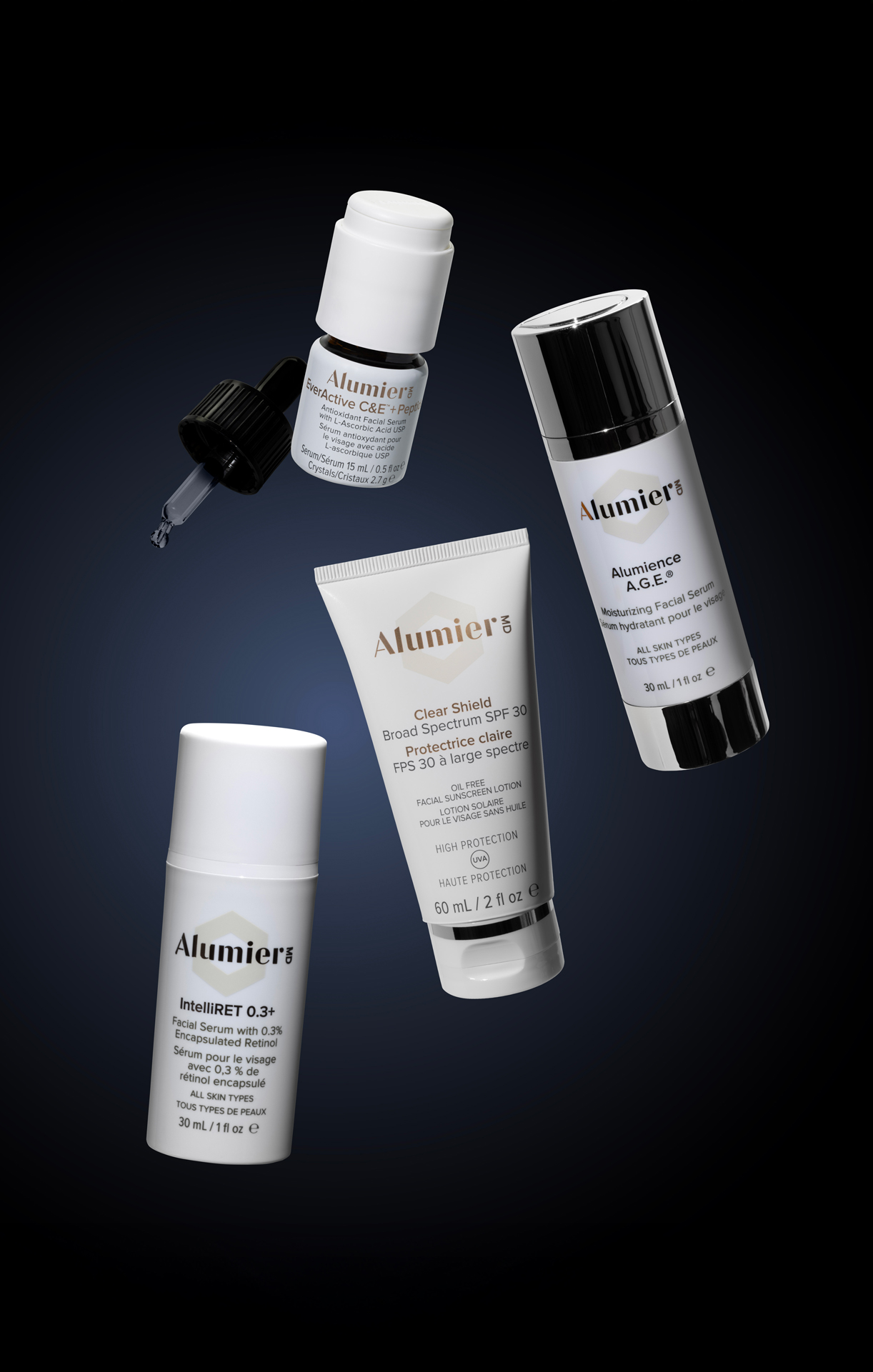
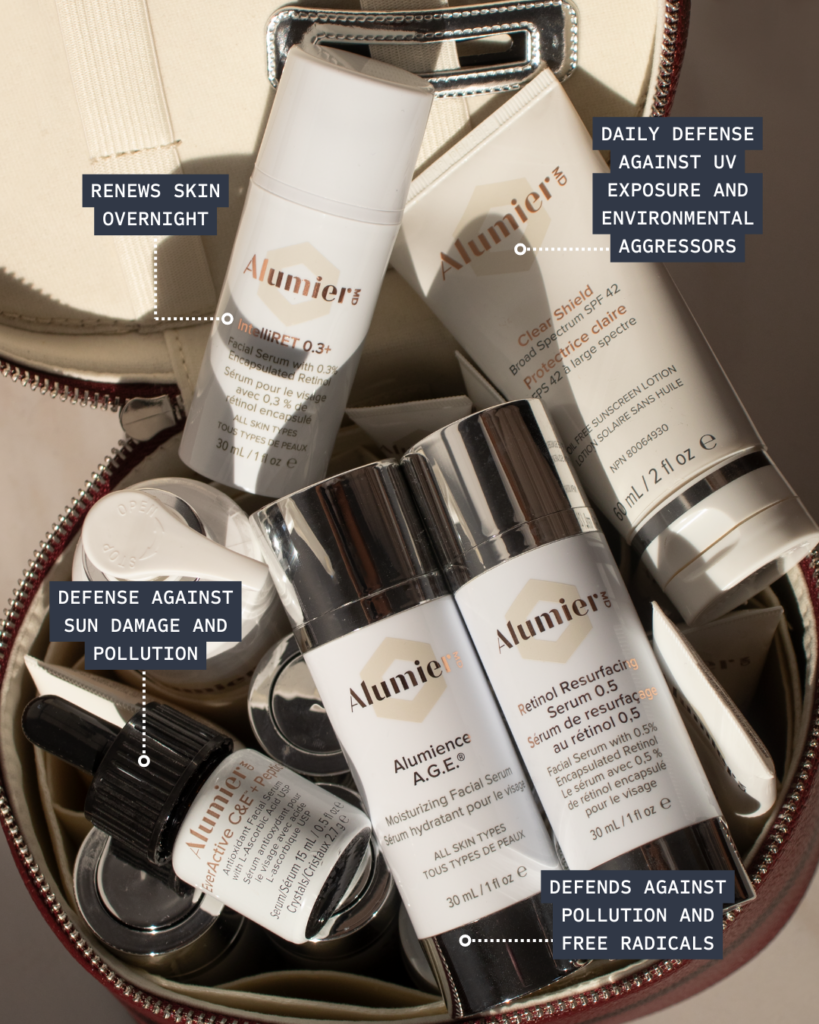
A daily antioxidant, such as EverActive C&E + Peptide, works within the skin to neutralise free radicals as they are generated. By reducing inflammation at source, it helps protect collagen, improve brightness, and support a more even skin tone. Over time, this creates a more stable foundation for the skin to function.
But protection alone isn’t enough — the skin also needs structural support.
Alongside this, we often introduce a more advanced layer of defence for patients experiencing more pronounced signs of oxidative ageing. Alumience A.G.E.® focuses on restoring lipid integrity within the skin — something that becomes increasingly compromised with chronic exposure. By supporting the barrier and targeting glycation-related changes, it helps improve resilience, hydration, and overall skin strength.
Protection, however, is just as important as correction — because without it, the cycle simply continues.
Daily use of a broad-spectrum SPF, such as Clear Shield, becomes non-negotiable. This is not simply about sun protection — it is about preventing the ongoing environmental damage that drives oxidative ageing. Modern formulations also extend protection against pollution and infrared exposure, helping to preserve the skin’s integrity over time.
Once the skin is protected and supported, we can then begin to actively stimulate regeneration.
A retinoid such as IntelliRET® works to improve cellular turnover, support collagen production, and enhance overall skin structure. When introduced correctly and gradually, it helps restore the skin’s ability to behave more like healthy, functional skin — improving texture, tone, and firmness over time.
Why this Combination Matters
Each product targets a different pathway in the ageing process. But it’s their combined effect that creates meaningful change.
- Antioxidants defend
- A.G.E. protects and repairs
- Retinoids regenerate
- SPF preserves
Together, they create a cycle of protection, correction, and prevention. The foundation of any long-term skin strategy.
Where Skincare Meets Treatment at Face Oxford
At Face Oxford, at-home skincare forms the foundation of every treatment plan.
Once the skin is supported and functioning optimally, this is where we can take things further — layering in advanced treatments to enhance and accelerate your results.
This might include SkinPen microneedling to stimulate collagen and improve overall skin quality, LED and regenerative therapies to calm inflammation and support repair, or more targeted treatments to address concerns such as pigmentation, redness, or visible signs of ageing.
By combining the right skincare with the right treatments, we’re able to work with the skin. Creating results that feel natural, balanced, and long-lasting.
If you’re unsure where to start, a skin consultation allows us to properly assess your skin and build a plan that’s tailored specifically to you.